
Posted October 24th, 2026
What to Do After a Sink Overflow
- IICRC Certified
- Licensed & Insured
- Open 24/7
- Locally Owned
Why a sink overflow deserves a fast response
A kitchen or bathroom sink overflow can look like a small mess that a few towels will handle. The water on the counter and floor is only part of the story. Water runs down the cabinet face, soaks into the bottom edges of the cabinet boxes and slips under the flooring at the toe kick. By the time anyone notices swelling or a musty smell, the damage has usually spread well past what was visible on day one.
This guide walks through what to do in the first hours after an overflow, how to tell whether the water reached hidden areas, and when it makes sense to call a restoration company. It comes from a crew that sees where the water really goes after these calls in Austin homes and businesses. Every property is different, so treat this as general guidance and put safety first.
Stop the water first
Turn the faucet off. If the sink is still backed up, do not run any more water into it, including the dishwasher, which often drains through the same line. If water keeps coming from the plumbing itself, close the shutoff valves under the sink. If those valves are stuck or the leak is behind the wall, shut off the main water supply to the home if you can reach it safely.
Keep away from water near outlets, power strips, appliances and cords. If water has reached an electrical outlet or a light fixture, do not touch anything that is plugged in. Turn off the breaker for that area only if you can reach the panel without standing in water. When in doubt, stay clear and call for help.
Get standing water up quickly
Use whatever is closest: towels, a mop or a wet and dry vacuum designed for water pickup. Never use a household vacuum on water. The longer water stands on the floor, the deeper it soaks into cabinet bases, baseboards and the gaps between flooring planks. That hidden water does far more damage than the puddle you can see.
Work from the edges of the wet area toward the sink so you are not spreading water into dry rooms. Lift rugs and mats and move them somewhere they can dry without sitting on another floor. Take photos of the water before and during cleanup, because they help later if you need to file an insurance claim.
Empty the sink cabinet and open everything up
Pull everything out from under the sink and leave the doors open. Cabinet boxes are often made from particleboard or other engineered wood that soaks up water through its bottom edges and swells. Drying air needs to reach inside the cabinet, under the cabinet floor if possible and along the back wall where the plumbing comes through.
Check the items you removed. Cleaning products, paper goods and boxes that sat in water should be thrown away or set aside to dry outside the cabinet. Look for any leaks around the drain, disposal and supply lines while the cabinet is empty. A slow drip that continues after the overflow will keep the area wet no matter how much you dry it.
Look for signs the water went further
Water from a sink overflow rarely stays where it landed. Common signs that it traveled include flooring that feels soft or spongy near the cabinets, planks that start to cup or separate at the seams, baseboards that darken or pull away from the wall and a musty smell that grows over the next day or two. On a second floor, look at the ceiling below for stains or sagging drywall.
Many Austin homes are built on concrete slabs, which means water can spread under laminate, vinyl plank and engineered wood flooring and sit on the concrete with nowhere to go. The surface can feel dry while the underside of the flooring and the bottom of the cabinets stay wet.
Get moisture readings the same day
Do not wait and see. Floors and cabinets can feel dry on the surface while the inside is still wet, and by the time swelling shows, the damage is often done. A restoration professional with a moisture meter and a thermal imaging camera can tell you in minutes what is wet, how wet it is and what can still be saved.
Moisture readings also give you a record. They show where water traveled, how the drying progressed and when materials returned to normal. That documentation matters if you file a claim, and it protects you if a future buyer or inspector asks about the kitchen.
Stabilize before the 48 hour mark
Water that sits in building materials for more than 48 hours can lead to mold growth, and Central Texas humidity slows natural drying. Getting commercial dehumidifiers and air movers running inside that window, and applying antimicrobial treatment where it is needed, is what keeps a wet kitchen from becoming a mold job.
Box fans and an open window can help with a damp countertop, but they usually cannot pull water out of cabinet bases, wall cavities and the space under flooring. Professional drying equipment is placed to move air across and under wet materials, and the readings are checked every day until they reach normal.
A real Austin kitchen we restored
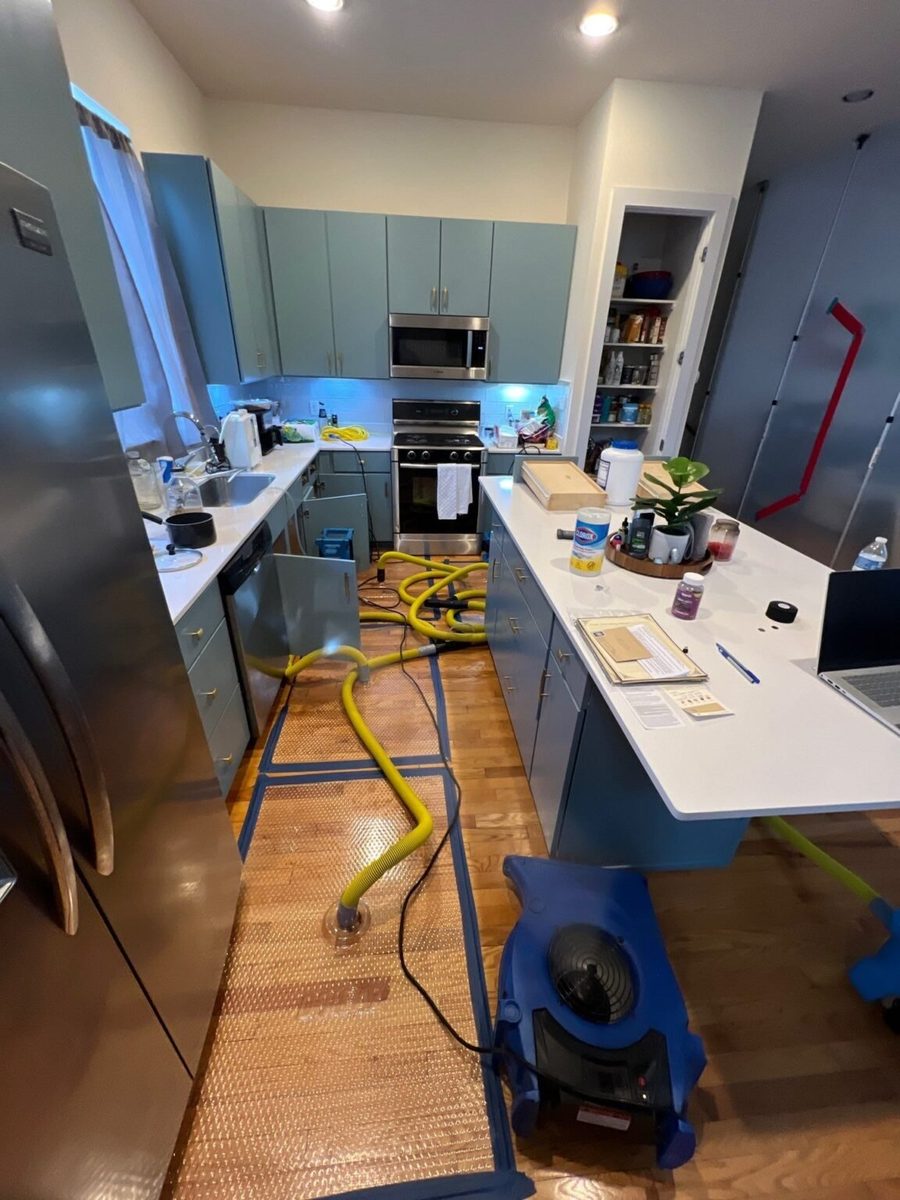
We handled exactly this situation in an Austin kitchen. A clogged sink overflowed with the faucet left running, and water spread across the floor and into the cabinet bases before anyone caught it. By the time the homeowner found it, the flooring and the bottoms of the cabinets had swelled past saving.
We set up drying equipment, monitored the moisture until the kitchen was dried to standard and then rebuilt the space with new cabinets and new flooring. The photos below show the kitchen during drying and after the rebuild.
Left, drying equipment in place after the overflow. Right, the finished kitchen with new cabinets and flooring.
Prevent the next overflow
Always keep grease, food scraps and coffee grounds out of the drain, and run the disposal with plenty of cold water. Never walk away from a filling sink. If a drain slows, have it cleared before it fully clogs. Check the supply lines yearly and replace any that bulge.
Will insurance cover a sink overflow?
It depends on your policy and the cause. Many homeowners policies cover sudden and accidental water damage, such as an overflow or a burst supply line, while slow leaks and long term damage are often excluded. Your insurer makes the final decision. Report the loss promptly, keep your photos and receipts, and ask your adjuster what documentation they need. We work directly with insurance companies and provide photos, moisture logs and a written scope.
When to call a restoration company
Call for help if water reached the floor around the cabinets, sat for more than a few hours, came from a backed up drain that may be contaminated, or reached a ceiling below. Call as well if you notice swelling, soft flooring or a musty smell in the days after the overflow, even if the kitchen looked fine at first.
AAA Disaster Recovery answers 24/7 at (737) 677-3833 and serves homes and businesses across Austin and Central Texas. Our IICRC certified crew can measure the moisture, explain what can be dried and what needs to be replaced, and get drying started the same day. Visit our contact page to send a request or call any time.
More Blogs
What to Do in the First 48 Hours After a House Fire
The first two days after a fire shape the whole recovery. Here is what to do for your safety, your insurance claim and your home.
Read More
Water Damage Categories and Classes Explained
Clean, gray and black water are handled very differently. Learn what water damage categories and classes mean for your home and your claim.
Read More
Signs of Hidden Water Damage Behind Walls and Under Floors
Stains, soft spots, musty smells and a rising water bill can all point to a leak you cannot see. Here is how to spot hidden water damage early.
Read More